From Prep to Table
Bring bread, cheese or sandwiches straight to the table. Here’s how to keep a shared board easy to carry, serve from and clean.

Use a clean, sound board for ready-to-eat food, and leave enough space for guests to cut and serve.
Choose the food before the arrangement
Start with something easy to portion: a sliced loaf, wedges of firm cheese or a few finished sandwiches. Keep jam, soft cheese and oily accompaniments in small dishes. The dishes contain moisture and give guests a clear place to put the serving spoon.
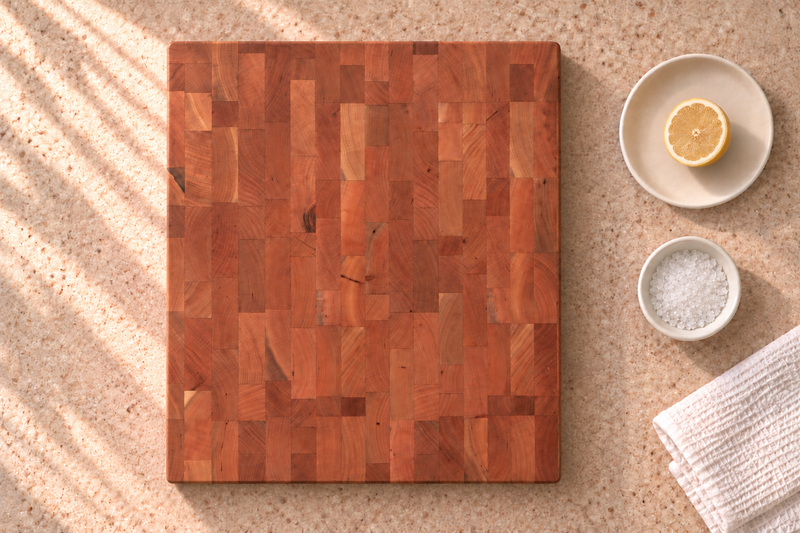
Before loading the board, try the arrangement empty. Set out the knife and any bowls. Check that there is room to cut a portion without pushing another food over the edge. A little visible grain gives the table warmth while keeping the board comfortable to use.

Give service a clean start
Use a separate board for raw meat, fish and poultry. Health Canada recommends keeping that preparation separate from ready-to-eat food. Turning a board over does not make it a separate surface: hands, edges and the counter underneath may also have touched raw juices.
Before serving, confirm that the board is clean, sound and fully dry. Remove any residue appropriately. After contamination, clean effectively and sanitize when required with a compatible food-contact product according to its label. Do not use a board from raw meat preparation for ready-to-eat service.
Check the journey to the table
A board feels different once it holds food and dishes. Test the route from counter to table with the empty board first. Make sure you can support it comfortably and set it down without moving glasses or reaching over a guest.
For a heavy board, arrange the food where it will be served. Carry the bowls separately. A handle can help with an empty board, but it does not replace support under a loaded surface. Leave a clear edge for your hands. Choose a smaller presentation if the board is awkward to lift or the table is crowded.
Support the board and clear its place
Two faces can share the work
Both faces of a reversible board need the same care. Keep them clean and dry, even if you use one more often.
On an otherwise clean, uncontaminated board, brush away loose dry bread crumbs or use a dry cloth. Use a barely damp cloth only when appropriate, then dry promptly. Food residue, grease or contamination requires effective cleaning and, when necessary, sanitizing with a suitable food-contact product according to its label. When washing is needed, use mild dish soap and lukewarm water. Wash and rinse both faces and all edges briefly, then towel-dry every side right away. Let air reach both faces. Never soak the board, put it in a dishwasher or dry it with direct heat.
Grooved face
Plain reverse
Our guide to reversible boards explains how to make those two roles easy to remember.
A serving board earns its place through simple, repeated use. Start with a loaf and one accompaniment. If the move to the table feels easy, you have found a useful second role for a familiar kitchen object.