THE WOOD CARE GUIDE
Caring for your wooden board.
Start with your model’s care instructions. These three steps cover everyday cleanup, drying and oiling.
Use a separate board for raw meat, poultry, fish and seafood. A contaminated board needs proper cleaning and sanitizing. Oil and cream do not sanitize wood.

THE ESSENTIALS
The habits that matter
Limit time in water
Brush away crumbs or use a barely damp cloth when a light wipe is enough. Frequent washing can contribute to cracks and warping; do not wash a new butcher block just after unwrapping. Wipe up spills promptly. When residue, grease or contamination requires washing, use mild dish soap and lukewarm water. Wash and rinse both faces and all edges briefly to spread water contact evenly. Never soak the wood, saturate it or use a dishwasher.
Give both faces air
After contact with moisture, towel-dry every side right away. Let air reach both faces, away from direct heat. Check underneath a butcher block for trapped moisture before storing it.
Oil before use, then as needed
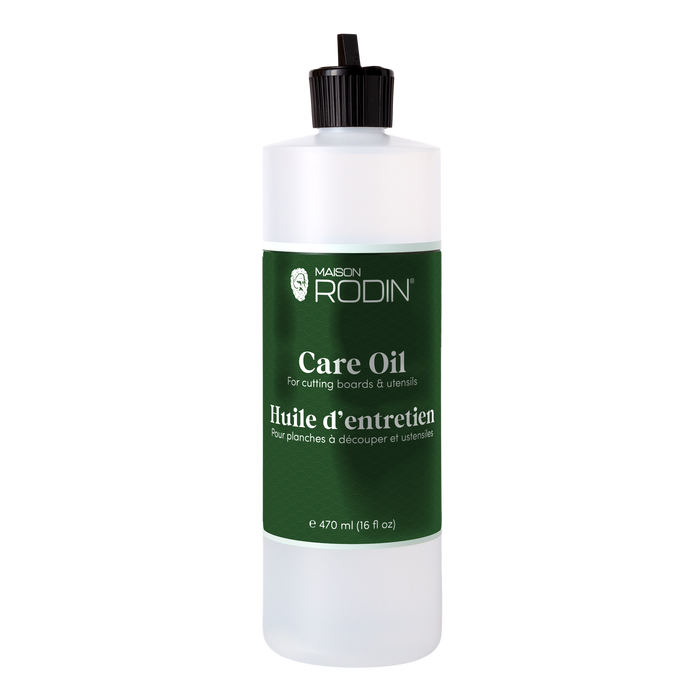
Oil a butcher block before its first use and again when the wood looks dull or dry. On clean, completely dry wood, apply food-grade mineral oil to both faces and all edges. Let it absorb overnight, then wipe off the excess before preparing food.
Lemon and coarse salt for surface stains
For a small surface stain or lingering food odour on an intact, unvarnished butcher block, MAISON RODIN recommends gently rubbing with half a lemon and coarse salt. Wipe away the salt and juice promptly with a clean, barely damp cloth. Follow the drying step above immediately. Never leave salt or liquid on the wood. This optional treatment does not disinfect or replace proper cleaning and sanitizing after contamination. Do not use it on mould, cracks or open joints.
READ FURTHER
What does your board need?
Find help with dry wood, warping, surface wear and seasonal care.
Why a board warps
Learn how moisture affects the wood and which habits help keep a board flat.
Read the guide CONDITIONINGWhen a board needs oil
Recognize dry wood and apply the right amount of oil.
Read the guide RESTORATIONRestore or replace?
See which signs of wear can be addressed and when to ask for help.
Read the guide CONDITIONINGOil or cream?
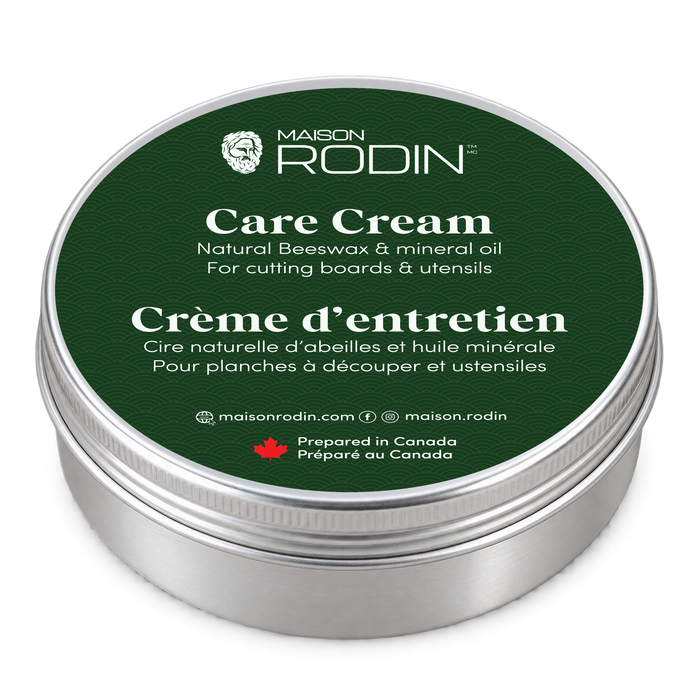
See when to use mineral oil and when to add a wax finish. Neither product cleans or sanitizes wood.
Read the guide SEASONAL CAREBoard care in winter
Learn what to check when indoor heating dries the air.
Read the guideFOR YOUR BOARD
Oil and cream
Check your product’s Care & Use instructions to choose the right treatment.