Stains, Odours and Everyday Use
Beet colour and garlic smells can linger on wood. Clean first, then check whether the mark is cosmetic or the board needs more attention.
Remove residue appropriately and inspect when dry. Colour alone does not establish cleanliness, and oil should never cover residue or an unresolved odour.
Deal with fresh residue promptly
Move chopped food to its container and remove scraps before juice or pulp dries on the board. Food residue and juice require thorough cleaning; use dish soap and water when needed, attending to grooves, edges and scored areas. Wash and rinse both faces and all edges briefly, without soaking the wood. Towel-dry every side right away, then let air reach both faces away from direct heat.
Keep the cleaning brief without skipping the scrub that residue needs. Do not leave the board in a sink of water. Strongly coloured vegetables are easier to manage when the board is cleared during preparation, rather than left under a wet pile while the rest of the meal cooks.
Separate colour from surface condition
After the board is fully dry, look at the marked area in daylight. Is it smooth? Is there a film, a sticky patch or trapped food? Those signs call for further cleaning or an assessment of the surface.
A light pink or purple shadow can remain after washing. Its colour alone does not tell you whether the board is clean or safe. Inspect the condition and consider how it was used. A smooth, sound board with a faint cosmetic mark may not need sanding. Avoid removing wood repeatedly to chase every trace of a meal.
Assess a lingering smell after drying
Once the board is dry, check whether an aroma remains. Inspect the groove, edges and cuts for trapped residue before repeating any cleaning. A faint garlic smell can affect the next bread or fruit preparation, but smell alone does not establish hygiene. Persistent odour after effective cleaning deserves advice from the seller.
Do not cover a lingering smell with perfume, scented cleaners or oil. If cleaning does not resolve it, stop food use and ask the seller for advice.

Avoid making a small mark into damage
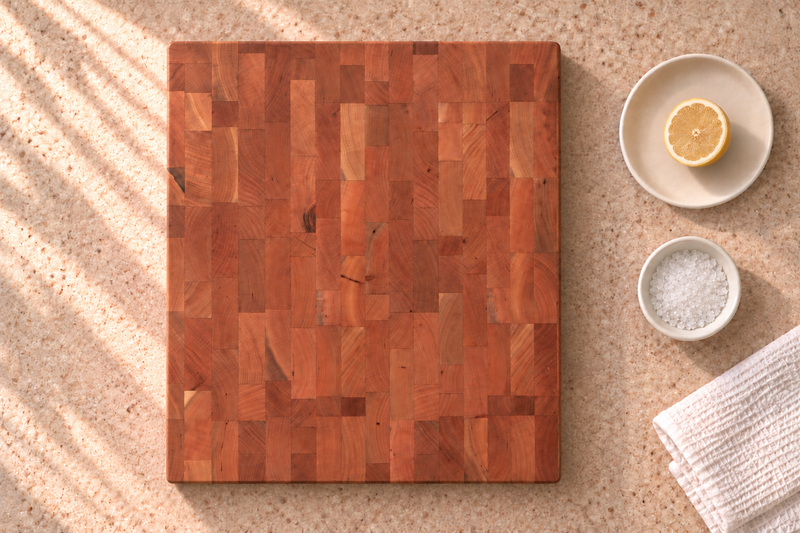
For a localized surface stain or lingering food odour on a sound, unvarnished butcher block, MAISON RODIN prefers gentle rubbing with half a lemon and coarse salt. Remove the salt and juice promptly with a clean, barely damp cloth, dry immediately and allow air around both faces. Do not leave liquid or salt on the wood. This is optional surface care, not disinfection; it does not replace effective cleaning and sanitizing after contamination. Do not apply it to mould, cracks or open joints. Avoid repeated soaking, harsh abrasives and improvised cleaner mixtures. Never mix cleaning products.
A manufacturer-permitted light sanding may suit a minor texture problem on a sound, unvarnished board. It is not a remedy for mould, open joints or deep damage. If the surface has grooves that cannot be cleaned properly, replace the board. Our sanding guide explains the narrow scope of a surface refresh.
Adjust the next meal’s setup
If you often prepare strongly flavoured ingredients, a second sound board can make bread and fruit preparation more pleasant. Give each board a clear role and clean according to its residue and contamination. Loose dry bread crumbs on an otherwise clean board can be brushed away without routine washing. A second board does not replace effective hygiene.
For the basic routine, see our daily cleanup and necessary washing guide.
A useful board can carry a little visual history. Keep the cleaning routine reliable, treat the surface according to its actual condition and leave cosmetic marks alone when removing them would do more harm than good.