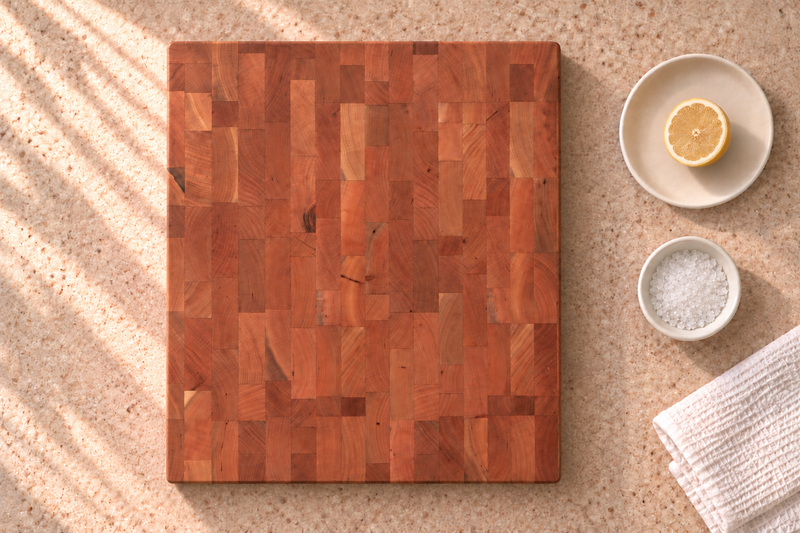
Raw Meat and Vegetables: Use Separate Boards
Plan separate work areas before opening raw ingredients. Distinct boards, knives and dishes make it easier to keep raw meat, poultry and fish away from food that is ready to eat.

Health Canada recommends separate boards for raw meat, fish and poultry and for ready-to-eat food. Keep hands, utensils and dishes from carrying residue between them.
Use separate boards for raw and ready-to-eat food
The USDA allows wood or a nonporous cutting surface for raw meat and poultry. The material is therefore only one part of the decision. Health Canada’s home-kitchen guidance recommends a separate board for raw meat, fish and poultry, apart from the board used for ready-to-eat vegetables, fruit and other foods.
Plan a clean surface for salad, sliced fruit, bread and cooked food, away from raw-food preparation. Choose a dedicated raw-food board that is easy to clean and easy to recognize.
Set out two complete work areas
Put the raw-food board where its packaging and juices will not pass over the ready-to-eat area. Have a plate or container for the prepared raw food nearby. Keep clean serving dishes away from that zone.
Choose different shapes or colours, or give each board a consistent storage place. Explain the roles to anyone helping. If you label the work areas, keep labels outside the cutting surfaces.
Extend the same separation to hands, knives, tongs and dishes. Wash hands after handling raw food and use clean equipment for the next task. Put cooked food on a clean plate, never back on the plate that held it raw.
Avoid the shortcuts that undo separation
Flipping the board: use a separate board for the next food task. The illustration below shows why the two faces cannot serve as separate stations.
Grooved face
Plain reverse
Cutting salad “just at the other end”: distance within one board is not a reliable boundary. Liquids and utensils can move across the surface.
Preparing vegetables first: a sensible sequence can make cooking easier, but it does not replace the recommended separate boards. Move ready-to-eat food to a clean dish and keep it away from the raw-food area.
Relying on oil or lemon: conditioning and home stain treatments do not replace washing or a specified sanitizing method.
Clean up the raw-food area
Remove residue, then wash with mild dish soap and lukewarm water. Briefly wash and rinse both faces and all edges without soaking or saturating the wood. Follow current public-health guidance and the label of a suitable food-contact product for any sanitizing step. Never mix cleaning chemicals. Towel-dry every side immediately, then let air reach both faces away from direct heat.
Keep glued wooden boards out of the dishwasher and never immerse them. Use a stable drying position. Clean any sink or counter surfaces touched by raw juices, and change contaminated cloths.
Inspect the board’s condition. Replace excessive wear or hard-to-clean grooves. Stop food use for an open joint or unresolved contamination concern. Our setup guide helps you keep this separation compact, even in a small kitchen.
Set out the two boards and their tools before cooking. Keeping those roles clear makes the routine easier to follow.